Today’s cantaloupe is not like it once was. The soft, mushy flesh and musky taste of older cantaloupe varieties have been updated to a cleaner, crisper, brighter, more refreshing sweetness with vibes of honey, cucumber and splash of citrus. California cantaloupe literally is bursting with sunshine!!
As always, cantaloupe is loaded with nutrients, antioxidants and gets its refreshing taste through its high water content. So, that means cantaloupe provides the hydration and electrolytes your body craves – especially in the summer.
Not only that, but cantaloupe is sustainably grown in the sunny fields of California by multi-generational farming families. Plus it’s designed to last longer on store shelves and in your refrigerator to reduce food waste.
We wish we could offer cantaloupe for sale on this website, but our organization exists solely to help educate people about our fruit and how best to eat it. But don’t worry, you’ll find California cantaloupe in just about every grocery store in the U.S. during the peak harvest months of June, July and August!!
Where Cantaloupe is Grown
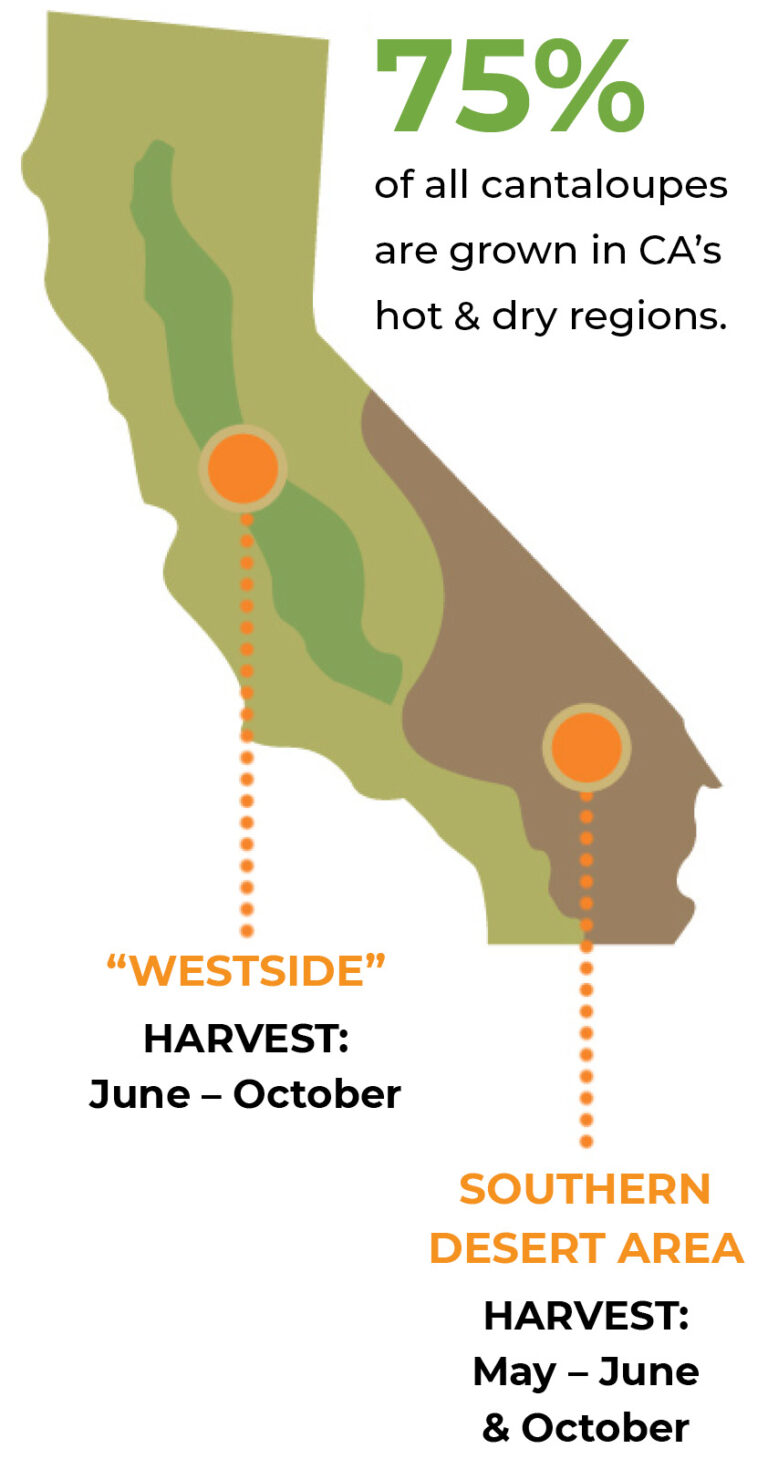
Although cantaloupe is available in stores year-round, California is the largest producer of fresh cantaloupe during the months of May through October when 75 percent of all cantaloupe consumed by Americans are grown in this sunny state.
Cantaloupe is also available in the summer from other states including Arizona, Texas, Indiana, Colorado, Florida, North and South Carolina. The rest of the year cantaloupe is available from Central America (particularly Guatemala and Honduras), Brazil, Peru, Mexico and some from the Caribbean.
In California, cantaloupes are grown in two main regions – the Southern Desert Area and on a 200-mile long stretch on the west side of the San Joaquin Valley from Bakersfield to Sacramento. The San Joaquin Valley growing area is where most of the cantaloupes in California are grown. Westside cantaloupes are planted in early April through mid-summer and harvest takes place between June and October. Cantaloupes from the desert growing region are harvested in early April through June then again in October.
All cantaloupes from California are produced in regions with weather that is hot and dry. Rain-free summers in California growing regions along with careful field preparation and irrigation practices by growers keep the cantaloupe dry to ensure that melon rinds develop properly.
How To…
How to Slice Cantaloupe
Contrary to popular belief, cantaloupe is really easy to cut and serve and is a very economical fruit option when purchased whole, sliced and stored in the refrigerator in large air-tight containers where it’s ready to grab as a snack anytime.
But don’t forget that cantaloupe actually comes in its own bowl. Slice in half, scoop out the seeds, grab a spoon and eat!What couldbe easier?
How to Select a Cantaloupe
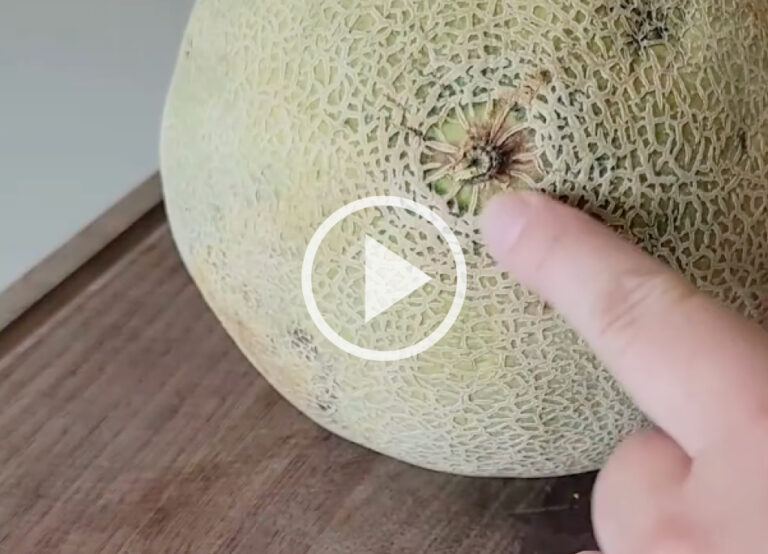
Picking a ripe cantaloupe is easier today than ever before. No longer is there a need for smelling or thumping these new cantaloupe. In fact, they are bred not to give off an aroma.
The key to a good, ripe cantaloupe starts on the farm. In California, farmers are required to make sure their cantaloupe meets a minimum sugar level before they can be harvested. So, all you have to do is pick one up and buy it.
Here are few ‘expert” tips to look for when selecting your cantaloupe:
Netting growing up the stem.
Slight softening or cracking at the “blossom” end (the end opposite the stem)
How to Clean and Store Cantaloupe
California Cantaloupe farmers go to great lengths to make sure each cantaloupe they grow is healthy and safe. In addition to science-based food safety practices, farmers have conducted research on the best way to store and prepare cantaloupes in the home.
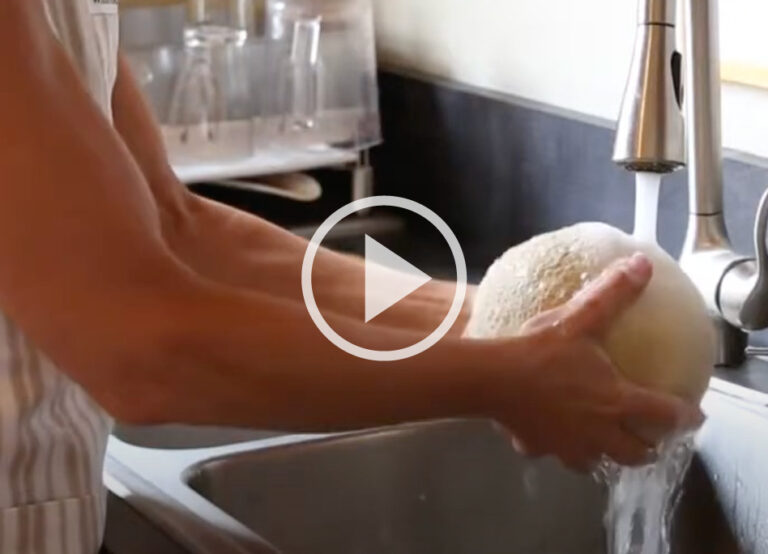
University scientists recommend that melons should be washed under running tap water before cutting. If desired, a scrub brush can be used on the melon rind. Melons, like all fresh produce, must be strictly separated from all potential contact with food items such as raw chicken, meat, seafood and eggs. Food preparers should thoroughly wash their hands, utensils, countertops and cutting boards. Do not store cut cantaloupe at room temperature for any length of time. Sliced melon should be stored in the refrigerator until it is ready to be eaten.
How to Eat Cantaloupe
Cantaloupe is so easy and versatile it can be used in numerous ways. Please visit our recipe section where you’ll find a host of fun, new ideas for using cantaloupe in drinks, appetizers, main course and desserts.
How to Be Kid Friendly
If your kids are like most, they love fruit!! Cantaloupe is an easy way to quench their need for fruit that is economical and nutritious. Keep some cut and ready to eat in your refrigerator at all times! Here are a few fun ideas to try.